Credo Diagnostics Biomedical is pleased to announce the expansion of the QubeMDx+™ veterinary molecular diagnostics portfolio with four new assays designed to support the detection of vector-borne, blood-borne, and zoonotic pathogens in companion animals.
As infectious disease challenges continue to evolve, veterinary professionals are increasingly faced with non-specific clinical presentations, co-infections, and pathogens that may have implications beyond animal health alone. Rapid and accurate molecular diagnostics play an essential role in supporting timely clinical decisions and effective disease management.
The latest additions to the QubeMDx+™ platform have been developed to address these real-world diagnostic challenges while expanding access to molecular testing directly at the point of care.
When Clinical Signs Overlap, Accurate Pathogen Identification Matters

Many infectious diseases in companion animals present with similar clinical signs, including fever, lethargy, anemia, thrombocytopenia, and chronic systemic illness. Because multiple pathogens may produce comparable manifestations, clinical assessment alone may not always provide sufficient information for accurate diagnosis.
Molecular diagnostics enable direct pathogen detection and differentiation, helping clinicians gain clearer insights into the underlying cause of disease and supporting more informed treatment and management decisions.
New Assays Available
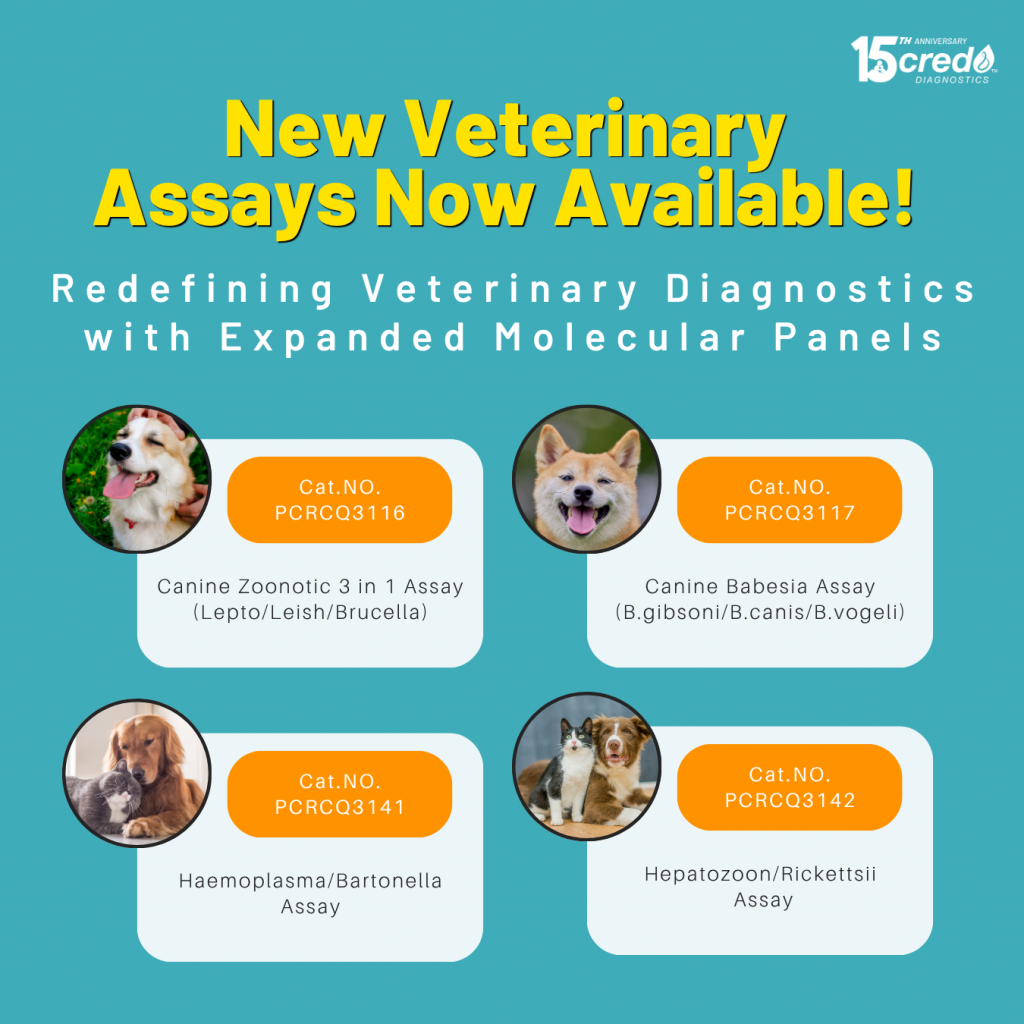
QubeMDx+™ Canine Babesia Assay (B. gibsoni / B. canis / B. vogeli)
Canine babesiosis may be caused by multiple Babesia species, each associated with distinct clinical characteristics and potential treatment considerations. Disease severity and therapeutic response may vary depending on the infecting species, making accurate species differentiation clinically valuable.
Traditional diagnostic methods such as blood smear microscopy may have limited sensitivity, particularly in cases with low parasitemia, while serological testing may offer limited species differentiation. The assay is designed to support molecular detection and differentiation of three clinically important Babesia species in a single test.
QubeMDx+™ Haemoplasma/Bartonella Assay
Haemoplasmas and Bartonella species are important vector-associated pathogens that may affect companion animals. Clinical presentations can range from asymptomatic carriage to anemia, systemic illness, and other complications. Bartonella infections have also been associated with vascular and systemic manifestations.
Because clinical signs are often non-specific and may overlap with other infectious diseases, molecular diagnostics play an important role in supporting accurate detection and species-level identification.
QubeMDx+™ Hepatozoon/Rickettsii Assay
Hepatozoon species and Rickettsia rickettsii are important vector-associated pathogens reported in companion animals. Clinical manifestations may vary considerably, ranging from subclinical infection to fever, lethargy, musculoskeletal discomfort, and chronic systemic disease.
Due to their diverse and often non-specific presentations, reliable laboratory diagnostics are critical for pathogen detection and effective clinical management.
QubeMDx+™ Canine Zoonotic 3-in-1 Assay (Lepto/Leish/Brucella)
Certain infectious diseases extend beyond veterinary medicine and require consideration of public health implications, potential human exposure, and infection control measures.
The QubeMDx+™ Canine Zoonotic 3-in-1 Assay enables simultaneous molecular detection of three important zoonotic pathogens in a single test, supporting faster clinical assessment, disease surveillance, and infection control efforts. Compared with sequential single-target testing, a multiplex molecular approach can help streamline the diagnostic process and support timely intervention.
Continuing to Advance Veterinary Molecular Diagnostics

At Credo Diagnostics Biomedical, we remain committed to expanding access to practical, accurate, and rapid molecular diagnostics for veterinary professionals worldwide.
Through continuous assay development and platform innovation, we strive to support earlier detection, informed clinical decisions, and improved outcomes for companion animals.